

The premium paid for the acquisition is $3 billion ($15 billion – $12 billion) if the fair value of Company ABC’s assets minus liabilities is $12 billion and a company purchases Company ABC for $15 billion. This $3 billion will be included on the acquirer’s balance sheet as goodwill. The company must impair or do a write-down on the value of the asset on the balance sheet if a company assesses that acquired net assets fall below the book value or if the amount of goodwill was overstated. The impairment expense is calculated as the difference between the current market value and the purchase price of the intangible asset. This is the act of tracking and reporting income and expenses related to your company’s taxes.
- It sounds simple, but in reality, a lot of behind-the-scenes work goes into accurately reporting on a business’s financial state.
- This is achieved by boosting revenues while keeping expenses in check.
- Incomes are recorded on cash basis whereas expenses are taken on accrual basis.
- To ensure that doesn’t happen, a component of business accounting is managing and reviewing inventory.
- This process ensures that revenue and expense accounts start at zero for the next period, allowing for accurate tracking of financial performance.
What is the difference between bookkeeping vs. accounting?
The history of accounting accounting has been around almost as long as money itself. Accounting history dates back to ancient civilizations in Mesopotamia, Egypt, and Babylon. For example, during the Roman Empire, the government had detailed records of its finances.

Principles of Taxation (PTX)

Unlike shareholder equity, private equity is not accessible to the average individual. Only “accredited” investors, those with a net worth of at least $1 million, can take part in private equity or venture capital partnerships. For investors who don’t meet this marker, there is the option of private equity exchange-traded funds (ETFs). In a credit transaction, the cash does not change the hands immediately at the time when the transaction occurs. Upon your request, your vendor agrees to receive the payment of $1,000 for goods sold to you next weak. You take the possession of the goods and transport them to your store.
- These are the usual transactions that a business performs on daily basis.
- The accounting information helps the management to plan its future activities by preparing budgets in respect of sales, production, expenses, cash, etc.
- The necessary information, particularly in case of external users, is provided in the form of financial statements, viz., profit and loss account and balance sheet.
- Classes include broad categories such as cash and cash equivalents, equities, commodities, real estate, and intellectual property, among others.
- For example, a company has to reference specific time periods in reports and follow the same accounting method across time periods to ensure accurate comparisons.
Why is accounting important for businesses?
The measurement and display of the net financial effects of similar type of transactions must be treated in a consistent form. Accounting helps you gauge where your small business stands financially, what it can afford at any given time, and where its money is coming from and going. In addition to this financial overview, proper accounting practices prepare your business to file taxes and produce financial statements needed for potential investors or business loan applications. Because their reports are regularly scrutinized by oversight agencies, accountants are required to adhere to a uniform set of accounting standards. These rules specify how to record income, expenditures, assets, and losses, so that auditors have an objective view of the organization’s financial health.
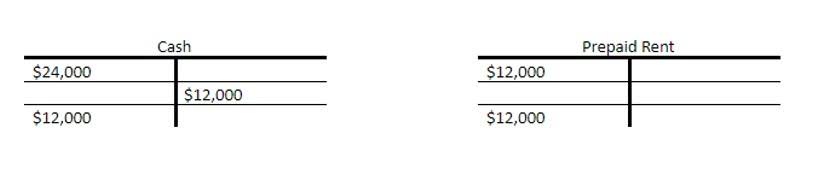
Accounting helps in the coordination of various activities in different departments by providing financial details of each department. To find out the results of a business, the information relating to the cost of the products and revenues from the accounting definition in business products is collected. Then the costs and revenues are compared to find out the profit or loss of the business. If volume of sales of the products is high and the number of transactions of the business is very high, it is impossible to keep all these transactions in the mind of a businessman. Accounting requires meticulous record-keeping and financial transaction tracking year-round. Moreover, keeping accurate records helps ensure your business is prepared to file taxes, present information to investors or even apply for a loan.
- Because of this, managers have some ability to game the numbers to look more favorable.
- Anyone with the right skills, training, or education can take on the job.
- Source documents include cash memo, purchase invoices, sales invoices, property transfer papers and written agreements, etc.
- Learn how to build, read, and use financial statements for your business so you can make more informed decisions.
- If the value of closing stock has gone down in the market, it should be written down to the extent of reduction in value.
- By referring to your balance sheet, you can track how effectively you’re collecting payment.

Looking at a single balance sheet by itself may make it difficult to extract whether a company is performing well. For example, imagine a company reports $1,000,000 of cash on hand at the end of the month. AI in Accounting Without context, a comparative point, knowledge of its previous cash balance, and an understanding of industry operating demands, knowing how much cash on hand a company has yields limited value. Under mixed basis of accounting both cash basis and accrual basis are followed. Incomes are recorded on cash basis whereas expenses are taken on accrual basis. The net income is ascertained by matching expenses on accrual basis with income on cash basis.
Shareholders’ Equity Statement
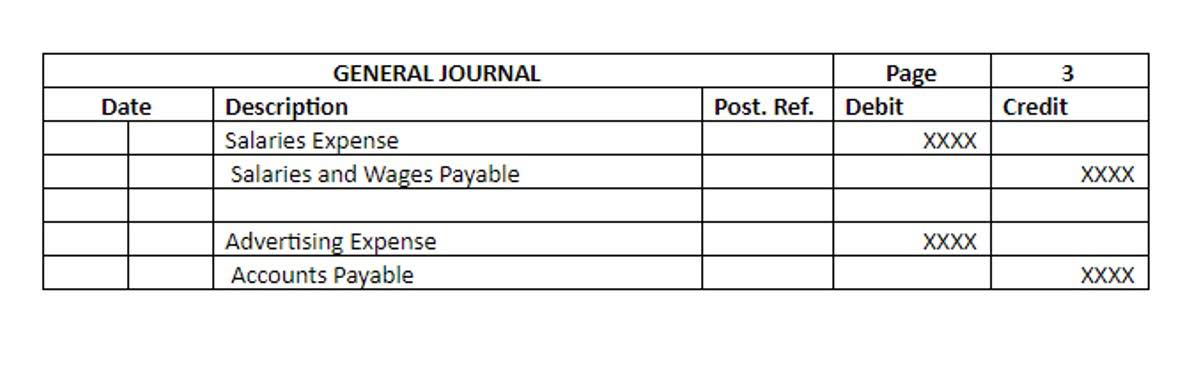
Most modern accounting software uses the double-entry accounting system, which requires two book entries — one debit and one credit — for every business transaction. The work performed by accountants is at the heart of modern financial markets. Without accounting, investors would be unable to rely on timely or accurate financial information, and companies’ executives would lack the transparency needed to manage risks or plan projects.